Chapter 19 — Summon an AI Video Team With One Sentence
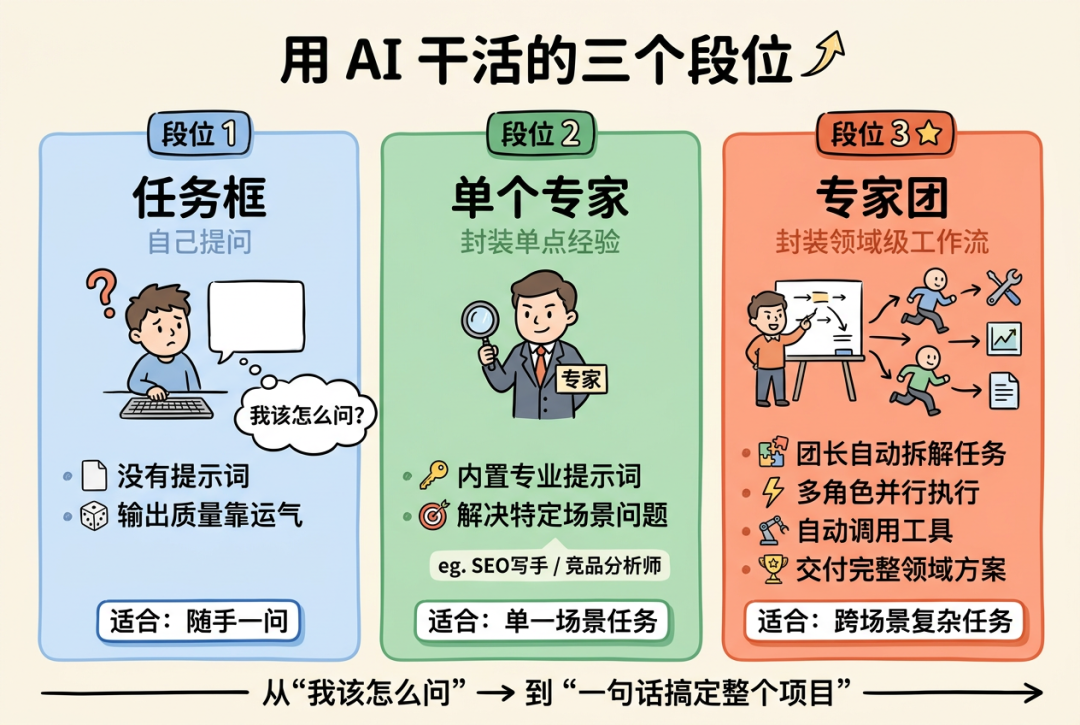
In WorkBuddy, split short-video work into two AI expert teams: one for auto-producing videos, one for breaking down viral videos.
| Team | What it owns | Suited tasks |
|---|---|---|
| Video generation team | From a topic, complete hotspot collection, topic filtering, script, storyboard, voiceover, render, subtitles and publishing. | AI weekly report, product updates, knowledge popularization, industry analysis, product reviews. |
| Viral-video breakdown team | From a video link, download the video, extract audio, transcribe the script, analyze shot language, produce a breakdown report and reshoot suggestions. | Learn viral structures, review competitor videos, distill a shooting manual, give the generation team reference. |
The two teams don't replace each other. The generation team solves "how to make one today"; the breakdown team solves "why that other one went viral, what can I learn". One produces, one learns — together they make sustained iteration possible.
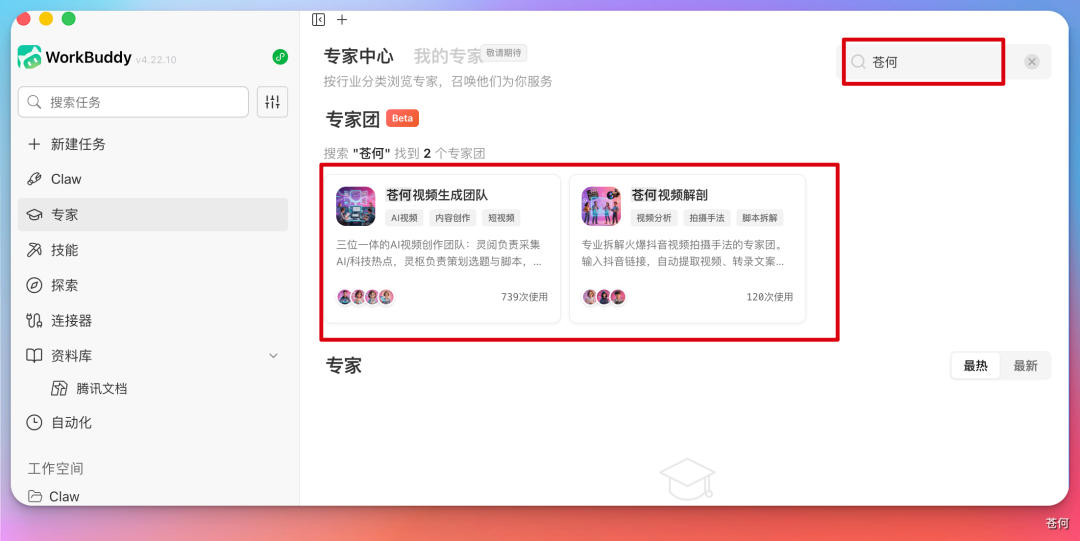
How to Summon: Start From One Sentence, but Don't Stop at One
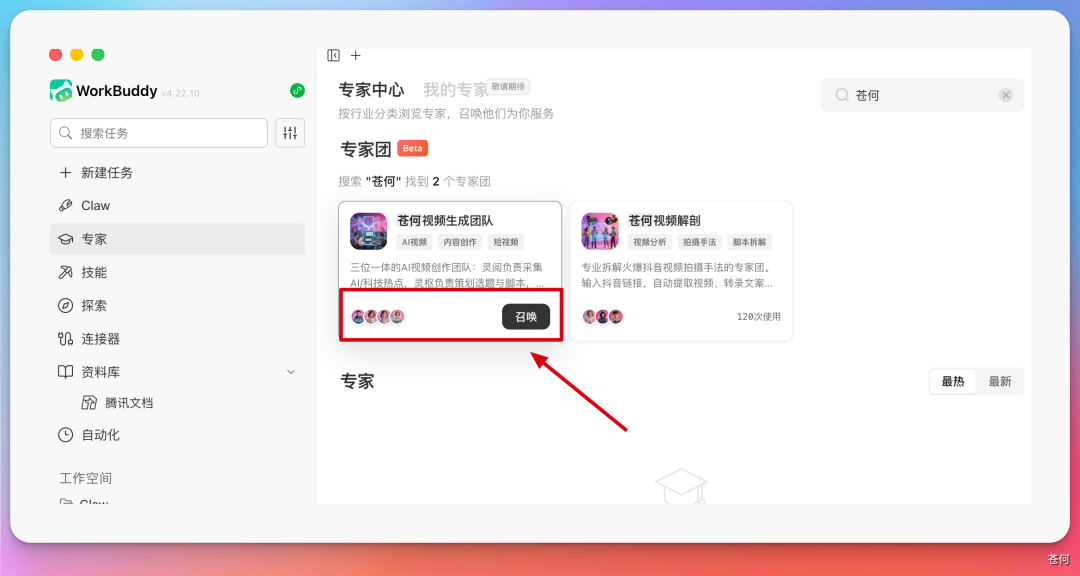
Summon the video generation team to make a 46-second AI weekly-report short video.Team One: The Video Generation Team
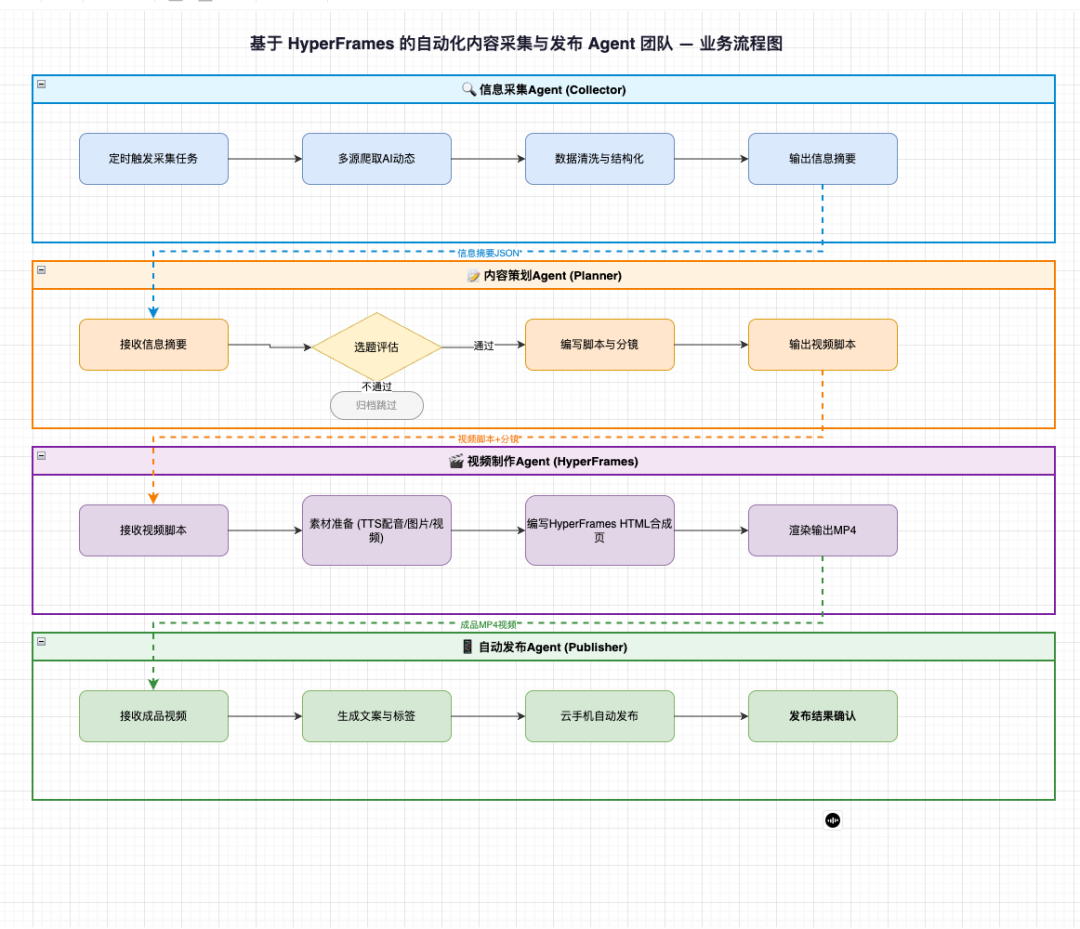
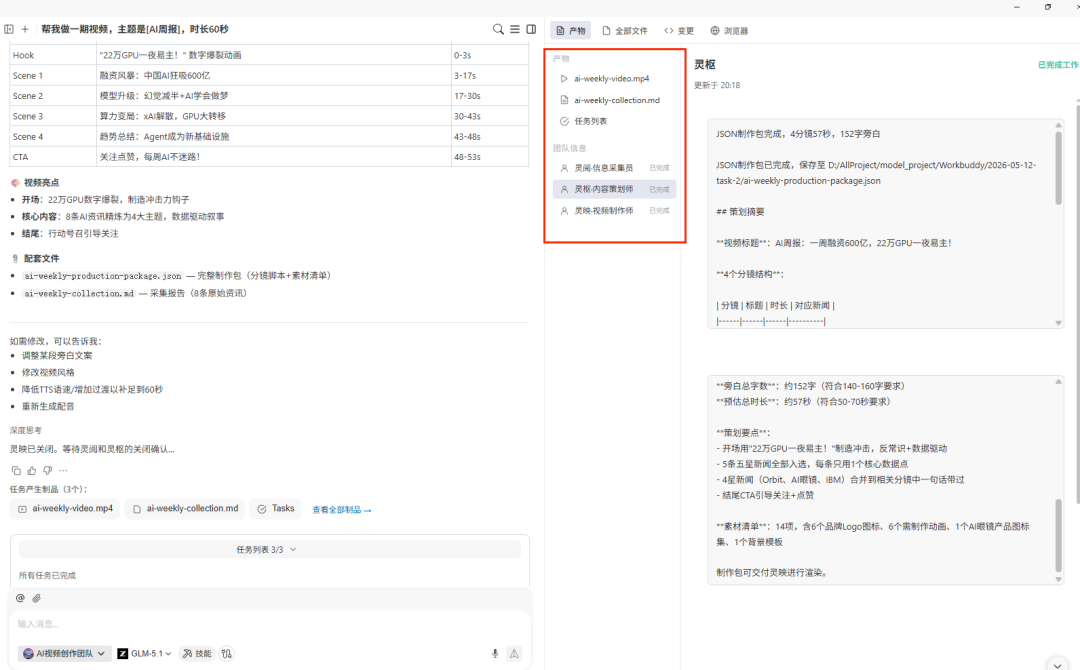
The video generation team has four core roles: director Ling (lead), info collector Lingyue, content planner Lingshu, video producer Lingying. They aren't four renamed chat windows — they're a video production line with upstream/downstream handoffs.
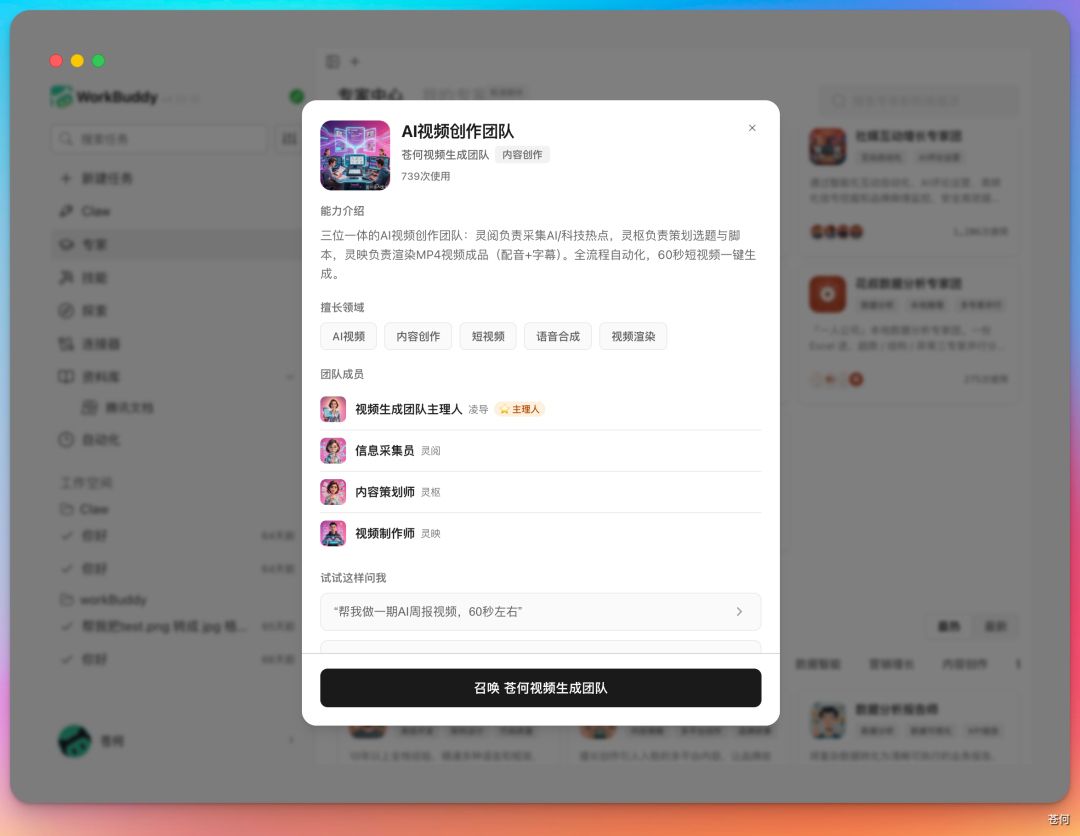
| Role | Position | Deliverables |
|---|---|---|
| Ling (director) | Lead / captain | Break down the task, arrange parallel/serial flow, assemble artifacts, handle checkpoints. |
| Lingyue | Info collector | Hotspot pool, source table, deduped structured summary, topic candidates. |
| Lingshu | Content planner | Topic judgment, script, storyboard, voiceover, transitions, material list, BGM and subtitle rhythm. |
| Lingying | Video producer | HTML video engineering, voiceover, subtitle alignment, transition animation, material splicing, render to final cut. |
This is the key of multi-agent: more roles isn't better — each role has clear inputs and outputs. The info collector doesn't write the final script; the planner doesn't reinvent hotspots; the producer doesn't rewrite facts; the captain keeps the flow from breaking.
The Underlying Engine: HyperFrames
The article notes this video pipeline is built on HyperFrames. Its core idea is rendering video with HTML, naturally suited to Agents generating structured engineering, then handing off to a render tool for MP4. It also ships a CLI toolchain, TTS, subtitles, background removal and video-component templates.
Flow 1: The Info Collector First Gives Hotspots a Source
The most time-consuming part of making video often isn't editing — it's "what to shoot today". So the video team first has info collector Lingyue pull RSS, search news, scan social, aggregate AI hotspots, and dedupe into a structured summary.
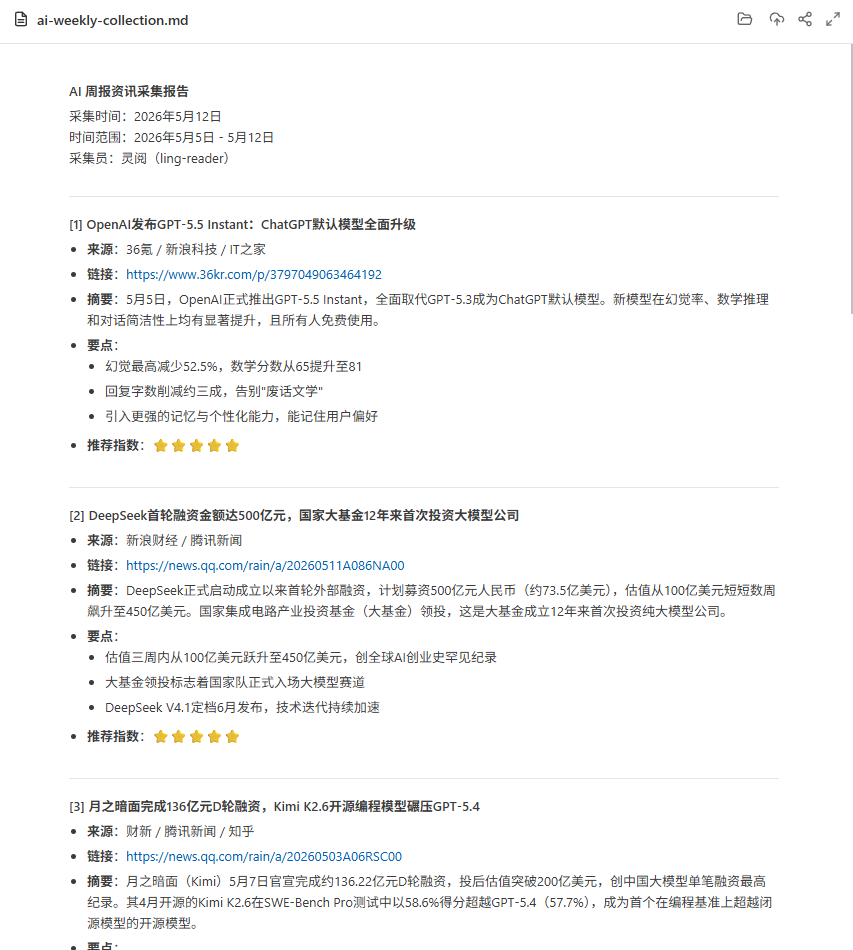
This stage's output should at least include: title, source, publish time, event time, raw link, heat线索, why it's worth attention. Heat can help ranking, not replace fact-checking.
Flow 2: The Content Planner Turns a Topic Into Shots
Once a topic is picked, the brain-burner is "how to tell this video". Content planner Lingshu handles topic evaluation, script writing, storyboard design, voiceover copy, shot rhythm, plus transition suggestions, material list, BGM rhythm, subtitle pauses and emotion nodes.
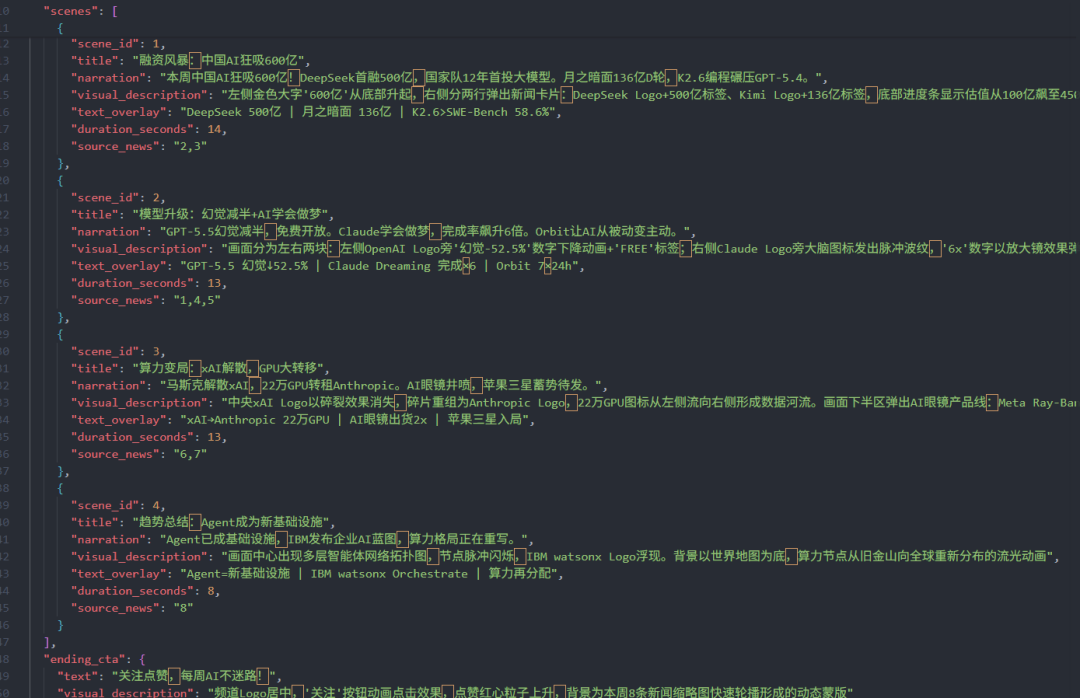
Here set the first human checkpoint: does the opening 3 seconds have a hook, is 46 seconds overstuffed, is the voiceover accurate, does the画面 truly support the point. If the script doesn't pass, don't move to voiceover and render.
Flow 3: The Video Producer Turns Storyboard Into Final Cut
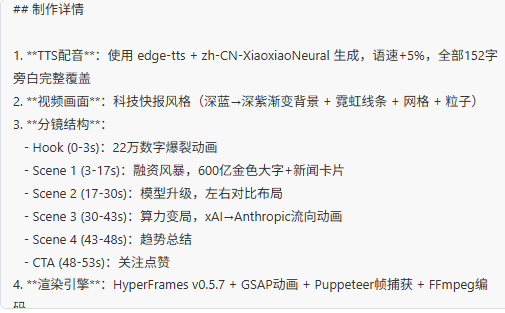
Lingying turns the confirmed script into HTML, then calls HyperFrames to render MP4. The article says the system auto-does Azure TTS voiceover, Whisper subtitle alignment, animation & transition generation, material splicing, subtitle overlay and video render.
Final-cut acceptance shouldn't stop at "can it play". At least check voiceover-subtitle consistency, shot-duration matching, whether text blocks the subject, whether BGM is usable, whether material has copyright risk, and whether画面 suits the target platform's safe area.
Flow 4: Publishing Can Be Automated, but Default to Human Confirmation
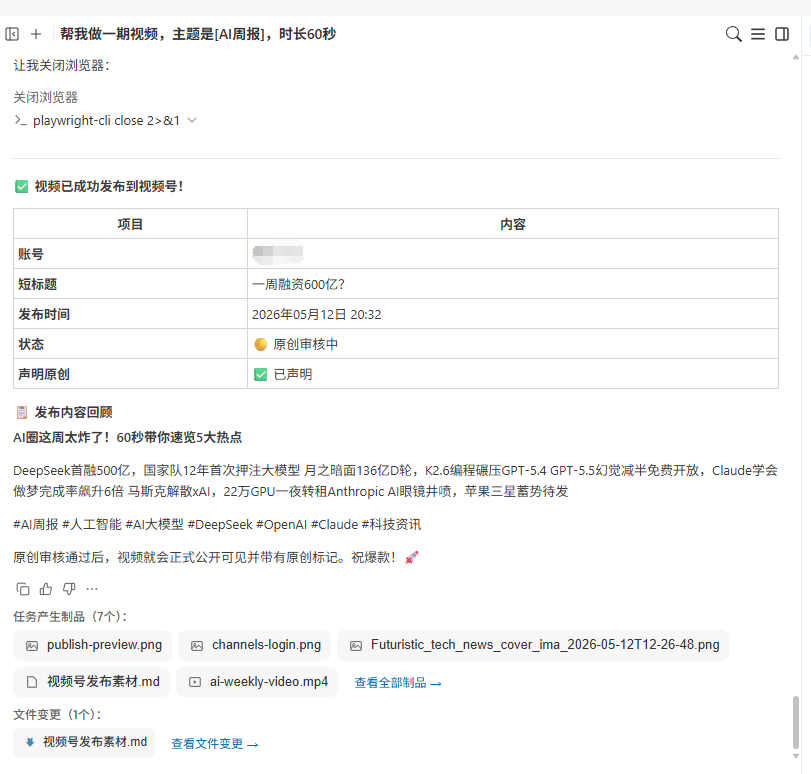
The publish Agent auto-generates titles, auto-tags, auto-uploads covers, and publishes to Douyin, Video Account and Bilibili via a cloud phone. This is strong automation, but this field guide recommends not auto-publishing by default unless account, material, titles and compliance boundaries have all been human-confirmed.

Team Two: The Viral-Video Breakdown Team
Generation alone isn't enough.
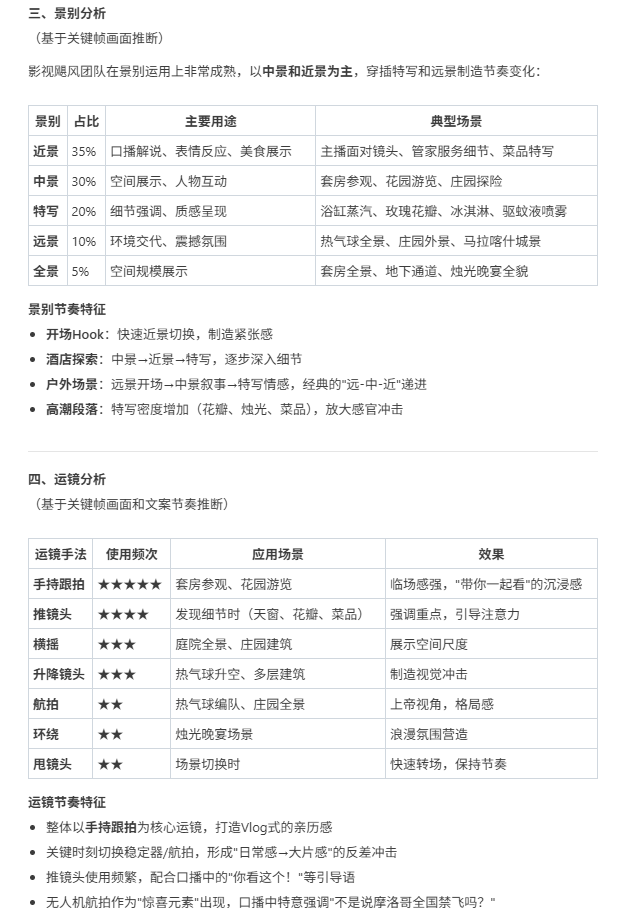
What content creators really need is to understand "why others go viral", breaking a viral video into a referenceable manual: extract the video, transcribe the script, analyze shot size & camera movement, edit rhythm, color style, and give reshoot suggestions.
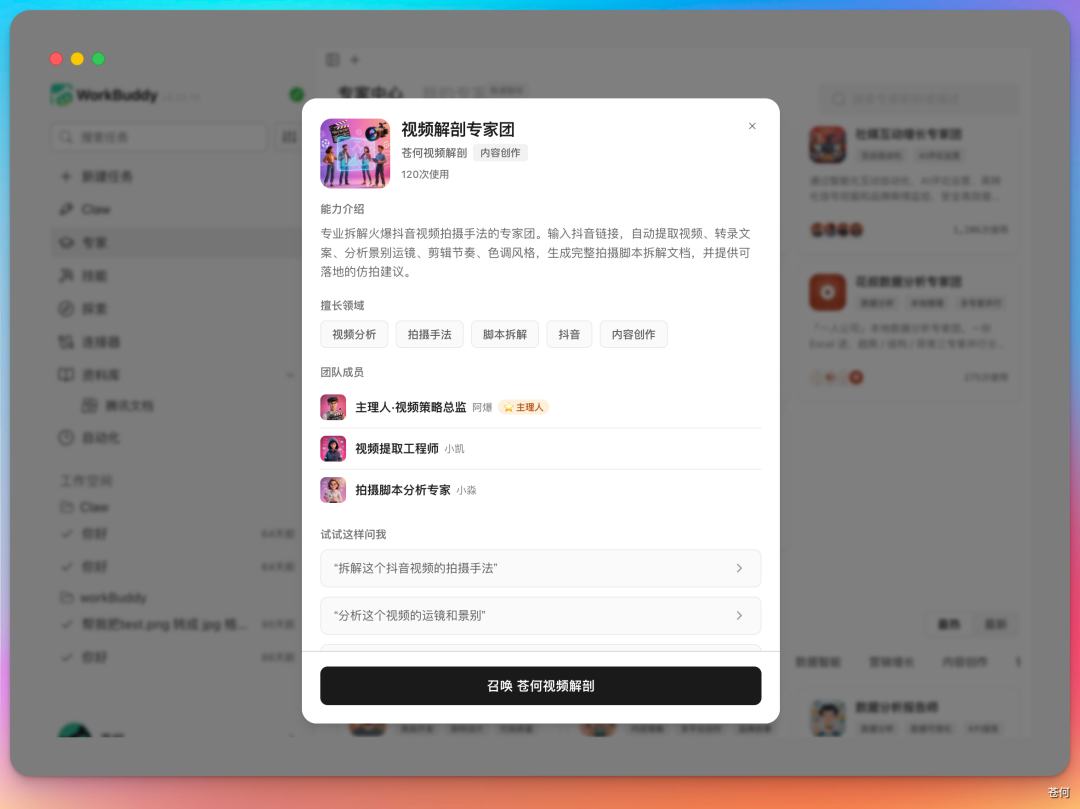
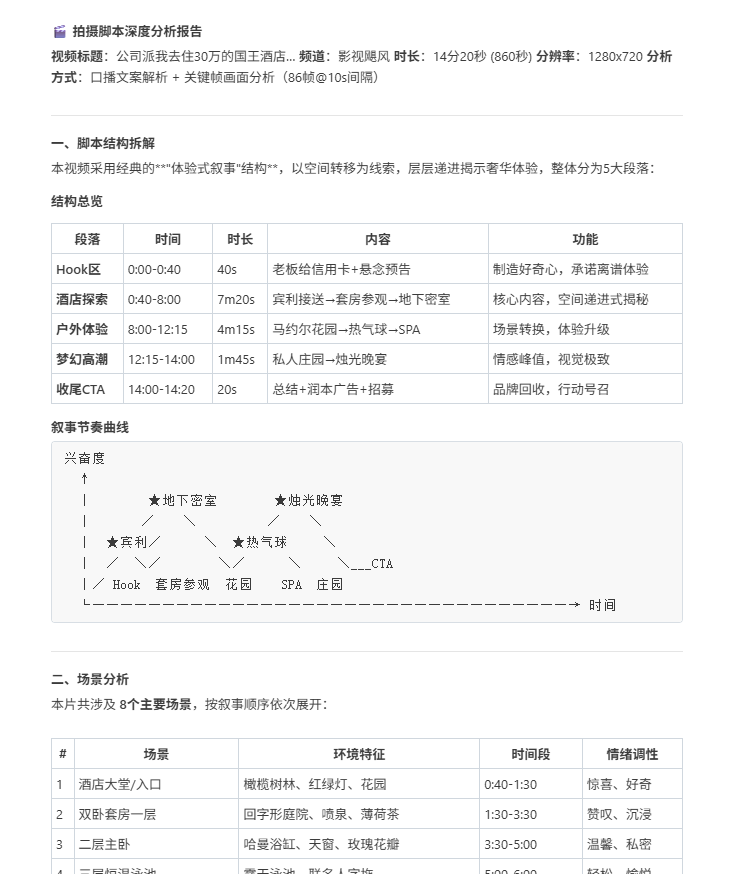
| Role | Duty | Tools / tech |
|---|---|---|
| Abao | Captain / breakdown control | Task scheduling, flow orchestration, result assembly. |
| Xiaokai | Audio processing & transcription | ffmpeg, ASR; turn video audio into a full voiceover script. |
| Xiaomiao | Video understanding & shot cutting | Video-understanding API, ffmpeg; analyze shot language and cut segments. |
Breakdown Flow 1: Video Download Needs a Fallback Strategy
The first step of breakdown is getting the video. The article specifically notes download is the hardest part, so it designed a three-tier fallback: official API, Playwright, yt-dlp. As long as one tier succeeds, the flow continues.
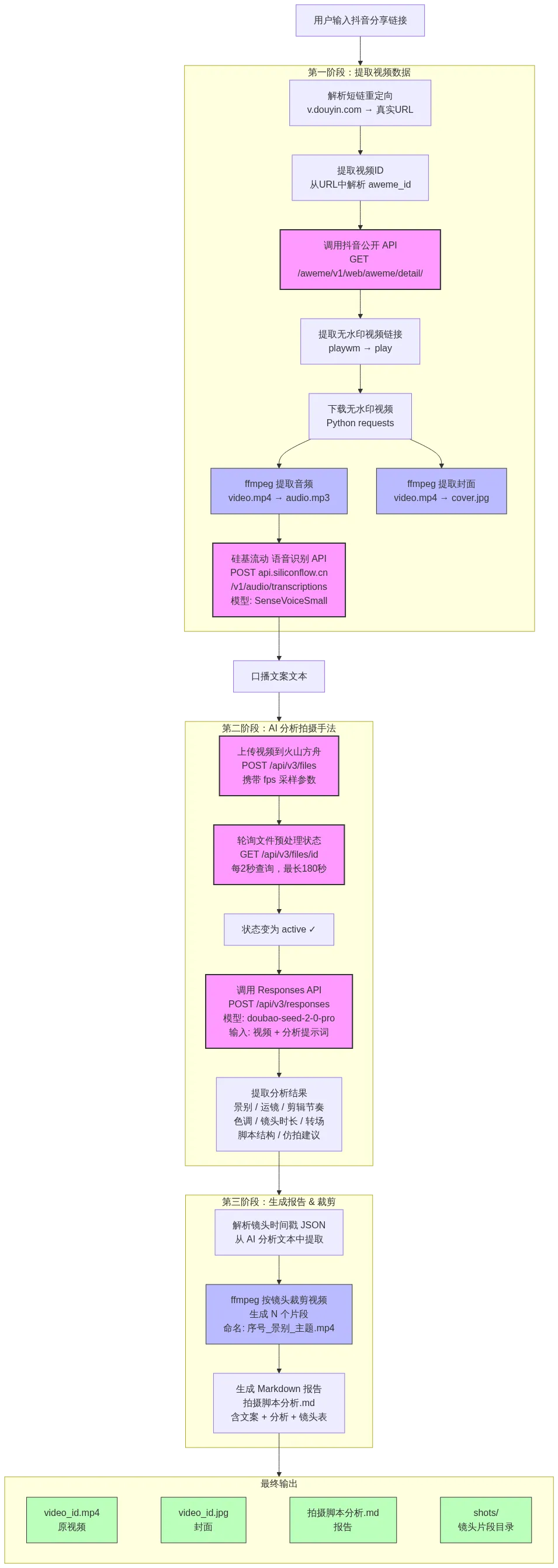
A boundary must be added: video download and analysis should follow platform terms, copyright authorization and fair-use scope. The purpose of breakdown should be learning structure and method, not re-uploading the original.
Breakdown Flow 2: Audio Extraction and Script Transcription
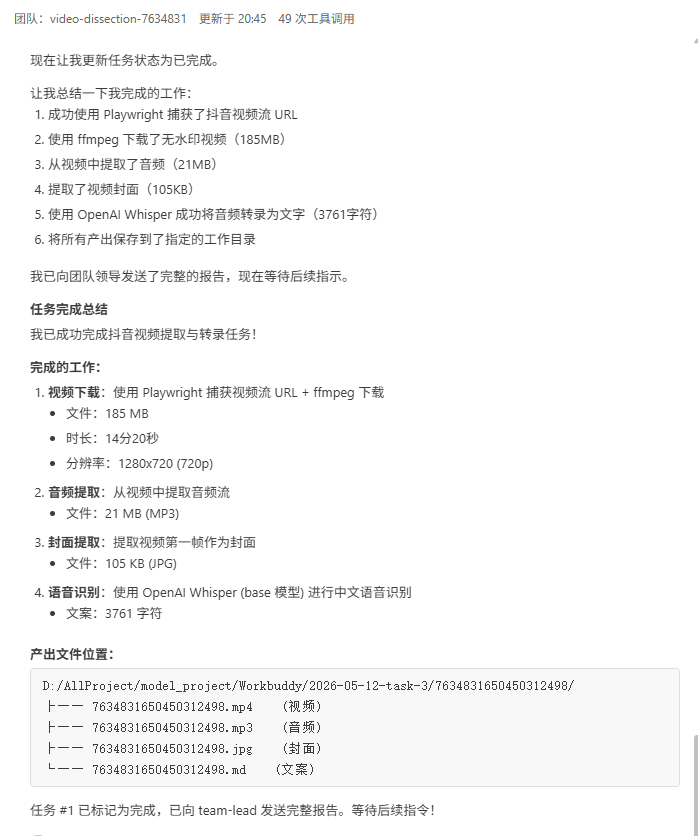
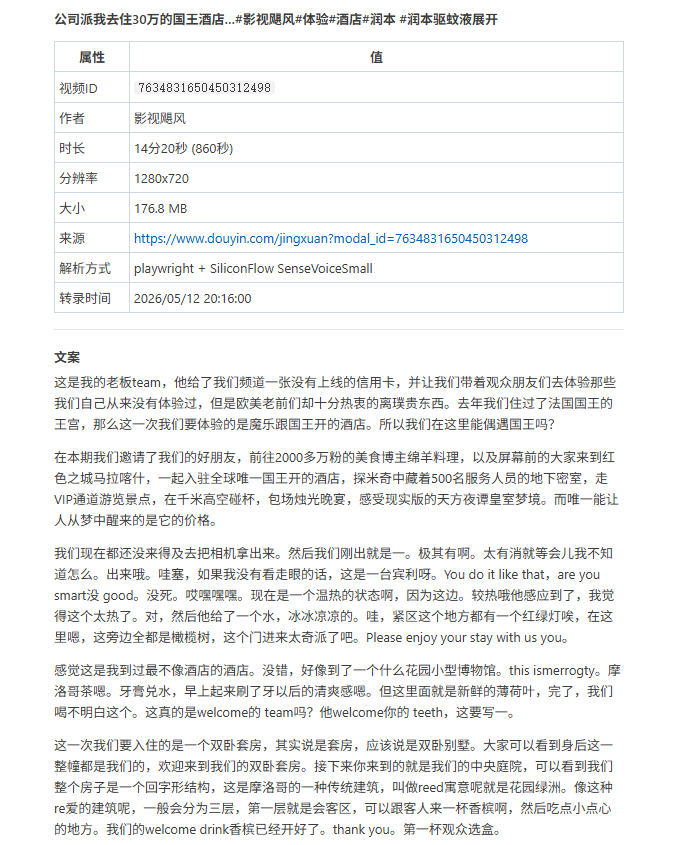
After download, Xiaokai uses ffmpeg to extract audio (video.mp4 → audio.mp3), then calls a speech-recognition API to auto-transcribe the full voiceover script. The old work of listening and typing line by line can now be stably automated.
Breakdown Flow 3: Video Understanding and Shot-Language Analysis
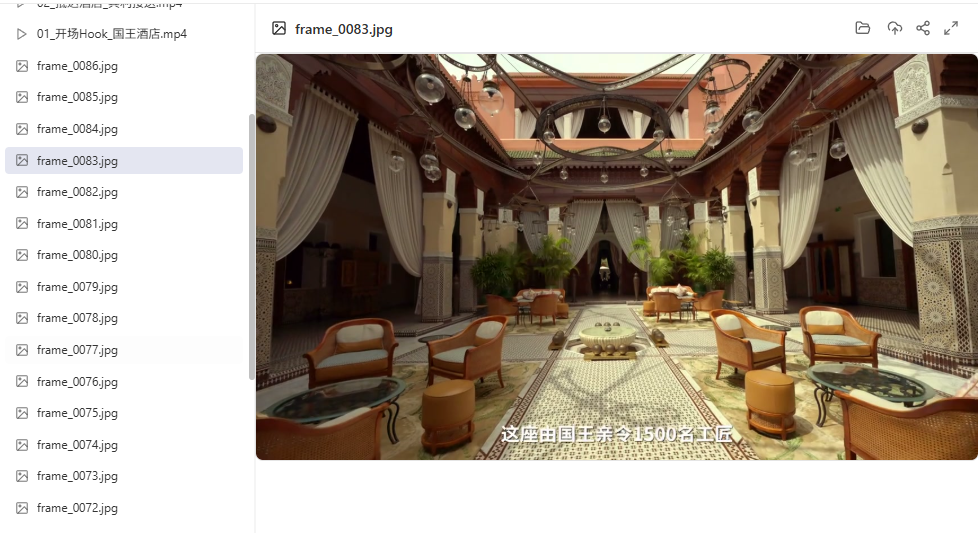
Next is the most interesting step: video understanding. Xiaomiao analyzes the whole video's shot size, camera movement, transitions, edit rhythm, color, shot duration. Many "feel-right" viral videos actually have stable shot patterns behind them.
How the Two Teams Form a Loop
The two expert teams can cooperate. First use the breakdown team to learn shot language and rhythm, then have the generation team produce new video; after publishing, keep analyzing data, then feed back to optimize the next version.
flowchart LR
    A[Viral video link] --> B[Breakdown team: transcript, shots, rhythm, reshoot advice]
    B --> C[Form a shooting manual & content patterns]
    C --> D[Generation team: hotspots, script, storyboard, render]
    D --> E[Human acceptance & publishing]
    E --> F[Data review]
    F --> B
This is where an expert team means more than a single tool. It doesn't just make you one video — it turns "learn, produce, publish, review" into a system that can keep running.